


In construction, unpredictability isn’t just part of the job — it is the job.
From material cost escalation to shifting labor availability, there’s always something changing in the background.
But few factors shake a bid like tariffs.
From steel and fasteners to specialty coatings and acoustic systems, price increases caused by tariffs can ripple through a project in ways that are hard to predict.
Tariffs in the construction industry are not new, but in recent years, they’ve become more unpredictable and more impactful.
When they hit, they don’t just raise prices; they ripple across timelines, budgets and supply chains.
In fact, recent analysis from Chmura suggests that with current effective tariff rates, these taxes could add an additional $41.7 billion in costs to the construction industry, potentially increasing the burden by thousands of dollars per housing unit.
Contractors may rework mid-project estimates or absorb unexpected costs to keep jobs moving forward.
For commercial construction estimators, the question becomes: how do you prepare for tariffs in construction when it’s something you can’t control?
One of the main answers lies in how you estimate.
Key Takeaways for Commercial Construction Estimators:
- Precise and data-driven estimating is the most effective way for commercial construction estimators to mitigate risks, manage costs and protect project margins.
- Tariff-heavy markets force estimators to plan strategically by analyzing supply chain risk, sourcing domestic materials, and pre-purchasing when feasible.
- Smart estimators build in contingencies (e.g., 5-10% buffer) and transparently communicate potential cost fluctuations due to tariffs with clients and stakeholders.
- Utilizing specialized estimating software with real-time data, integrated takeoff and trade-specific features empowers estimators to produce faster, more accurate bids that account for market complexities and unpredictable tariff impacts.
Understanding the Impact of Tariffs on Construction Projects
Tariffs disrupt construction estimating by driving unpredictable changes in material pricing, project budgets, and supply chain planning.
When tariffs are imposed on construction-related materials — like aluminum framing, membrane waterproofing, foreign-made insulation or epoxy coatings — contractors are left to absorb those added costs or pass them along to clients.
Either way, it’s a balancing act. You can’t control the cost of goods, but you can control how prepared you are.
The tricky part is timing. Construction tariffs can come with little warning, be influenced by trade relationships, and affect specific products that once seemed to have consistent market standards.
For example, according to Roofing Contractor, costs have increased rapidly since the start of this year, with input prices rising at a 6% annualized rate through the first five months of 2025.
Which means what was a competitively priced bid three months ago might be a different story by the time you’re on-site.
That’s why the estimating stage in construction becomes more important than ever. It’s not just about pricing what you know today — it’s about making informed decisions that account for what might change tomorrow.
Why Accurate Estimating Is Your Best Defense
An accurate estimate is more than a number — it’s a strategic construction tool.
It reflects your understanding of a project’s scope, the real-world costs of labor and materials and the external factors that could cause those costs to fluctuate.
Tariffs fall squarely into that last category.
By grounding your bids in solid, up-to-date data, you can reduce construction costs and minimize your construction cost estimating mistakes.
For instance, even in months where overall construction input prices might appear tame, you may still see significant spikes in tariff-affected materials.
Recent data from the Associated Builders and Contractors indicates that steel mill product prices rose nearly 6% in April, and copper wire and cable prices increased 5%, specifically due to tariffs.
So for example, let’s say you’re estimating an EIFS exterior package and a new tariff increases the cost of imported foam insulation and mesh.
If your original numbers were tight, that price spike could threaten your margins.
But if your estimate accounts for potential material cost escalation, consists of at least 5-10 % contingency or identifies equivalent domestic options, you’re more likely to stay on track.
In all these cases, accurate estimating gives you:
- A clear understanding of where your biggest risks lie in the supply chain
- The ability to model different pricing scenarios if tariffs are introduced mid-project
- A more transparent way to communicate construction cost estimating with clients and stakeholders
Estimates built on up-to-date material databases, vendor quotes and labor production rates aren’t just smart — they’re essential in a tariff-sensitive market.
Smoother Adjustments with the Right Financial Tools
Integrated estimating and accounting tools give contractors real-time visibility into how tariffs and material price changes impact project costs.
Pairing your estimating and construction accounting software helps teams monitor how real-time costs track against estimates, spot budget overruns early and identify trends that can inform future bids.
When pricing changes hit mid-project — whether from tariffs, supply chain delays or labor shifts — teams need fast, accurate visibility into how that impacts their financial picture.
Just as importantly, change order management tools allow contractors to pivot quickly and protect profits.
When material pricing increases after a bid is accepted, change orders provide a structured way to account for those shifts and adjust the project scope or cost accordingly.
Without that flexibility, even the best estimate can fall apart under unexpected cost pressures.
Getting Strategic About Materials and Sourcing

In a tariff-heavy environment, it’s not just about pricing materials correctly — it’s also about knowing your options.
Estimators who work closely with project managers, suppliers and procurement teams are often able to flag risk areas early.
When thinking about how to combat construction tariffs, consider common estimating questions like:
- If a certain material category is likely to be affected by tariffs, can you pre-purchase it?
- Can you source domestically?
- Can you offer a comparable product with a more stable cost?
It’s these kinds of strategic conversations — rooted in accurate construction estimating — that help project teams navigate volatile conditions without overextending budgets or timelines.
More than ever, collaboration between field and office teams is essential. When estimators bring cost intelligence to the table early, the entire project is better equipped to adapt as things evolve.
Thinking Beyond the Numbers: Tariff Mitigation Strategies
While tariffs impact on construction is often discussed in terms of percentages and price tags, the real story is how they affect the day-to-day work of construction professionals.
They change how you plan a job, how you communicate with clients and how you manage risk.
Accurate estimating isn’t about predicting the future — it’s about preparing for it.
This preparation is particularly important in a market where nonresidential construction spending recently hit a record $1.26 trillion in February, according to Construction Dive.
You can stay prepared with construction cost management strategies like:
- Building contingency into your numbers
- Documenting your assumptions clearly
- Staying current on market trends
You’re not just protecting your bid, you’re protecting your business.
Even when circumstances shift, your estimate becomes a roadmap that helps your team stay aligned and responsive to improve construction bids.
And perhaps most importantly, accurate estimating reinforces trust.
When clients see that your bids are thoughtful, transparent and adaptable, you stand out in a competitive market, especially during uncertain times.
See How The EDGE® Supports Accurate Estimating
Tariffs may be out of your hands, but your estimating process isn’t.
With the right tools in place, like estimating software for contractors, you can build bids that reflect real-world complexity, without slowing down your workflow.
That’s where The EDGE comes in.
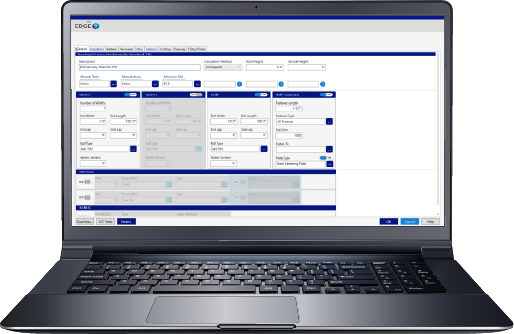
Designed specifically for specialty contractors, The EDGE all-in-one construction estimating and takeoff software helps you produce faster, more accurate estimates with trade-specific features, integrated takeoff and real-time data.
When accuracy matters — and it always does — The EDGE helps you stay competitive, even when market conditions are unpredictable.
Contact us today to see how The EDGE can support smarter estimating strategies, no matter what challenges lie ahead.